React.js Development for B2B Business: Build Fast, Scalable and User-Friendly Web Applications
This is where React.js Development for B2B Business can play an important role.
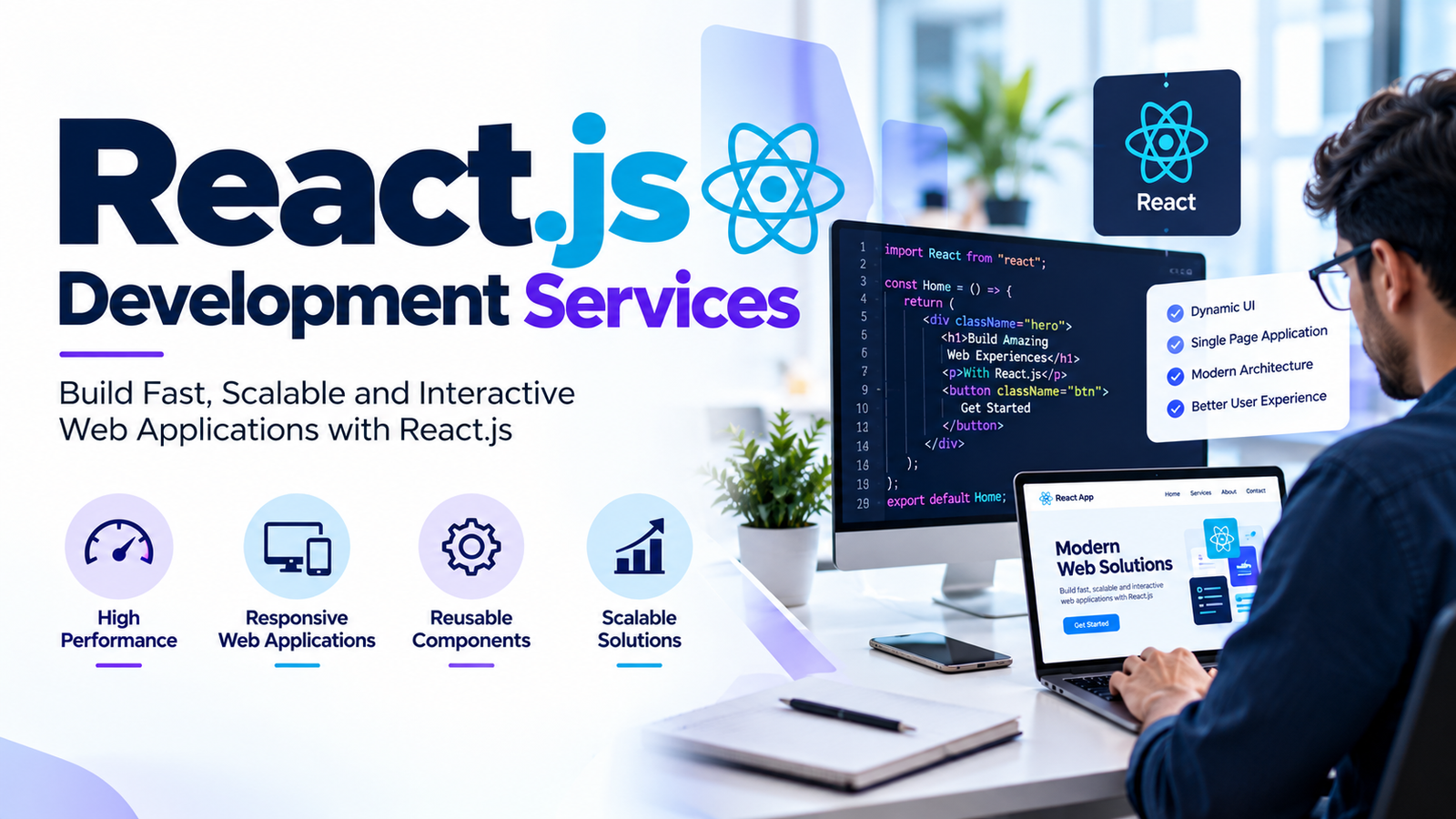
React.js is a popular JavaScript library for building modern, interactive and responsive user interfaces. It is particularly ideal for web applications where users need to interact with large amounts of information, dashboards, forms, products, reports or business processes.
For manufacturers, wholesalers, distributors, suppliers, exporters, service providers and enterprise businesses, React.js can help deliver faster and more user-friendly digital platforms.
What Is React.js Development?
React.js is a frontend technology used to deliver the visible and interactive part of a website or web application.
It can be used to develop:
- B2B ecommerce platforms
- Customer portals
- Dealer portals
- Vendor dashboards
- CRM interfaces
- Product catalogue systems
- Order management platforms
- SaaS applications
- Business dashboards
- Custom web applications
React.js is component-based, which means that developers can build reusable interface elements such as forms, tables, buttons, product cards, dashboards and navigation menus.
This structured approach can make larger applications easier to maintain and expand.
Why Is React.js Useful for B2B Businesses?
B2B websites and applications usually have more complex requirements than ordinary business websites.
For example, a B2B platform may require:
- Multiple user roles
- Large product catalogue
- Customer-specific pricing
- Bulk ordering
- Quote requests
- Order history
- Dealer management
- Real-time dashboards
- API integrations
React.js can help create responsive and interactive interfaces for these requirements.
The aim is to deliver a smooth user experience while making complex workflows easy to understand.
1. B2B Ecommerce Development with React.js
B2B ecommerce is different than regular B2C ecommerce.
Business buyers may require functionality such as:
- Bulk ordering
- Minimum order quantity
- Dealer pricing
- Customer-specific pricing
- Repeat ordering
- Quote requests
- Product filters
- Order history
React.js can be used to build a modern frontend for a customized B2B ecommerce platform.
For example, a distrbutor can log in and view negotiated pricing, select products, enter large quantities and complete an order in a responsive interface.
The frontend can connect with a backend system via APIs to manage products, customers, pricing and orders.
2. B2B Customer Portal Development
A customer portal delivers a secure space for business customers to manage their relationship with a company.
A React.js customer portal may include:
- Customer login
- Account information
- Orders
- Quotations
- Invoices
- Support requests
- Downloads
- Notifications
Instead of contacting a company every time they require basic information, customers can access this information themselves.
This can improve convenience for customers and reduce repetitive work for employees.
3. Dealer and Distributor Portal Development
Manufacturers and wholesalers often deal with dealers and distributors across multiple locations.
A dealer portal can help centralize communication and ordering.
React.js can be used to create an easy-to-use dealer dashboard where authorized users can:
- Browse products
- View dealer prices
- Place orders
- Check order status
- Download catalogues
- Submit enquiries
Different dealers can be assigned different permissions or pricing structures depending on business requirements.
4. Fast and Interactive User Experience
B2B applications may contain hundreds or thousands of products, records, customers or reports.
Users should be able to move through the application smoothly.
React.js can provide interactive experiences where specific sections of a page update without reloading the entire page.
This can make applications feel faster and more responsive.
For B2B users who may spend significant time inside a business portal, improved usability can make daily work more efficient.
5. React.js Dashboard Development
Dashboards are common in B2B applications.
A dashboard may contain:
- Sales figures
- Orders
- Pending enquiries
- Customers
- Inventory
- Revenue
- Reports
- Business performance
React.js can be used to build interactive dashboard interfaces with charts, filters, tables and data cards.
For example, a sales manager may filter performance information by employee, month, product or region.
A clear dashboard can help users understand important information quickly.
6. React.js for CRM Systems
CRM software helps businesses manage leads, customers, follow-ups and sales activities.
React.js can be used to build the frontend of a custom CRM system.
The CRM interface may contain:
- Lead management
- Customer profiles
- Sales pipeline
- Follow-up reminders
- Tasks
- Reports
- Team performance
React.js can make these modules more easily navigated with a responsive and interactive interface.
For B2B businesses with longer sales cycles, an organized CRM can help teams maintain complete records of customer communication.
7. Product Catalogue Development
Manufacturers and suppliers may have large product catalogues.
A React.js-based catalogue can contain:
- Product categories
- Search
- Filters
- Product specifications
- Images
- Technical documents
- Related products
- Enquiry forms
Instead of fording users with long static pages, React.js can create dynamic filtering and search experiences.
This can help B2B customers find the products they require more quickly.
8. Quotation Management Systems
B2B transactions do not always use fixed pricing.
Customers may need quotations based on:
- Quantity
- Product type
- Location
- Custom specifications
- Delivery requirements
- A React.js web application can contain a quotation request system.
Business buyers may select products, enter quantities, add requirements and submit a request.
The company can review the enquiry and respond with a quotation.
This can make the B2B purchasing process more organized.
9. React.js API Integration
Most modern B2B applications need to communicate with other software.
React.js applications can connect with backend systems via APIs.
Possible integrations may include:
- CRM
- ERP
- Inventory software
- Payment gateways
- Shipping systems
- Accounting platforms
- Custom databases
For example, when product inventory changes in the backend system, the updated information can be displayed on the React.js frontend.
The exact integration possibilities will depend on the APIs available.
10. React.js with Node.js
React.js is commonly used with Node.js.
React.js delivers the frontend interface, while Node.js can be used for backend logic and APIs.
This combination can be useful for:
- B2B ecommerce
- SaaS platforms
- Real-time dashboards
- Custom business applications
- Customer portals
Using JavaScript technologies across both frontend and backend can also provide a consistent development ecosystem.
11. React.js with Laravel
React.js can also be used with Laravel.
Laravel can manage:
- Backend logic
- Database
- Authentication
- APIs
React.js can manage the frontend user experience.
This combination may be suitable for:
- CRM systems
- Customer portals
- Admin dashboards
- Ecommerce platforms
- Custom enterprise applications
The technology combination should always be selected according to project requirements.
12. Mobile-Responsive B2B Applications
Business users may access portals from offices, warehouses, meetings or while travelling.
This means B2B applications should work well on multiple devices.
React.js interfaces can be designed to adapt to:
- Desktop computers
- Laptops
- Tablets
- Smartphones
Responsive development helps ensure that forms, tables, dashboards and navigation retain usability on different screen sizes.
13. React.js for SaaS Platforms
SaaS products are frequently used by B2B customers.
A SaaS platform may deliver:
- Customer accounts
- Subscription plans
- Dashboards
- Reports
- Team management
- Business tools
React.js can help create cleaner and interactive interfaces for SaaS applications.
As SaaS platforms often contain multiple modules, the component-based structure of React.js can also support consistent interface development.
14. Custom React.js Development for B2B Workflows
Every B2B organization operates differently.
One company may require a dealer management platform, while another may need an order tracking application.
Custom React.js development can help create interfaces around specific business workflows.
Custom features may include:
- Approval systems
- Custom forms
- Bulk data management
- Role-based dashboards
- Order workflows
- Customer-specific interfaces
The application should help support the company's existing processes without more complicated operations.
15. Role-Based User Interfaces
B2B applications often have several types of users.
For example:
Administrator: Complete access
Sales Manager: Sales reports and team data
Dealer: Products, prices and orders
Customer: Account and order details
React.js can display different menus, dashboards and features according to a user's role.
Backend security should still control actual access permissions, while React.js provides the appropriate frontend experience.
16. Performance Optimization
Performance is important for B2B applications, especially those that contain large data sets.
Developers can use different approaches to improve React.js performance, such as:
- Loading only required components
- Optimizing images
- Efficient data requests
- Reducing unnecessary rendering
- Pagination for large lists
Good performance planning can help keep applications responsive as functionality expands.
17. React.js Development for Manufacturers
Manufacturers can use React.js to create digital platforms for customers, dealers and internal teams.
Possible solutions may include:
- Product catalogues
- Dealer portals
- Quote systems
- Order dashboards
- CRM interfaces
- Inventory displays
This can help manufacturers move traditional offline business processes into organized digital platforms.
18. React.js Development for Wholesalers and Distributors
Wholesalers and distributors may deal with large product inventories and regular orders from business buyers.
React.js can help create:
- Bulk ordering interfaces
- Product search
- Customer-specific pricing
- Repeat ordering
- Account dashboards
- Order tracking
An efficient user interface can make frequent purchasing easier for business customers.
19. Benefits of React.js Development for B2B Business
React.js can deliver several practical advantages for B2B projects:
- Modern user interface
- Interactive experiences
- Reusable components
- Responsive design
- API integration
- Flexible application development
- Easier frontend expansion
- Support for complex dashboards
However, technology alone does not guarantee a successful application.
Good planning, backend architecture, security, performance and user experience are equally important.
20. React.js Development Process
A professional React.js B2B project should usually start with requirement analysis.
Business Analysis
The team understands users, workflows, goals and required features.
UI/UX Planning
Layouts and user journeys are designed according to the how customers and employees will use the application.
Component Development
Reusable React.js components are developed.
API Integration
The frontend is connected to backend services.
Testing
Developers test responsiveness, functionality, forms and user experience.
Deployment
The application is deployed to the production environment.
Maintenance
New features and improvements can be added as business requirements evolve.
How to Choose a React.js Development Company
Before choosing a development partner, consider:
- React.js experience
- B2B application knowledge
- UI/UX capabilities
- API integration skills
- Backend experience
- Testing process
- Ongoing support
Explain your business workflow clearly
A development company should understand why each feature is required before building it.
React.js Development for B2B Business – GrowthWeb Digital
GrowthWeb Digital offers custom website, web application and software development solutions for businesses with differing digital requirements.
Our React.js development solutions can support:
- B2B Ecommerce Platforms
- Customer Portals
- Dealer Portals
- Custom Dashboards
- CRM Interfaces
- Product Catalogues
- SaaS Applications
- API-Driven Web Applications
- Responsive Business Applications
The focus is on developing clear, practical and scalable interfaces that make complex B2B processes easier for customers and teams to manage.
Conclusion
React.js Development for B2B Business can help manufacturers, wholesalers, distributors, suppliers, service companies and enterprise organizations to build modern digital platforms around their business processes.
A successful B2B React.js application combines:
Fast User Experience + Responsive Design + Custom Workflows + API Integration + Scalable Architecture + Easy Navigation
React.js can be particularly valuable when your business requires interactive dashboards, customer portals, ecommerce systems, dealer platforms or custom web applications.
Instead of simply creating another website, the aim should be to build a digital system that makes it easier for customers, partners and employees to interact with your business.
If your company requires a custom React.js B2B ecommerce platform, customer portal, CRM interface, dashboard or business application, GrowthWeb Digital can help develop a solution according to your requirements.
📞 +91 9211050111 | +91 9211030111
🌐 www.growthwebdigital.com