High-Intent Long-Tail Keywords: How to Attract Customers Who are Ready to Convert
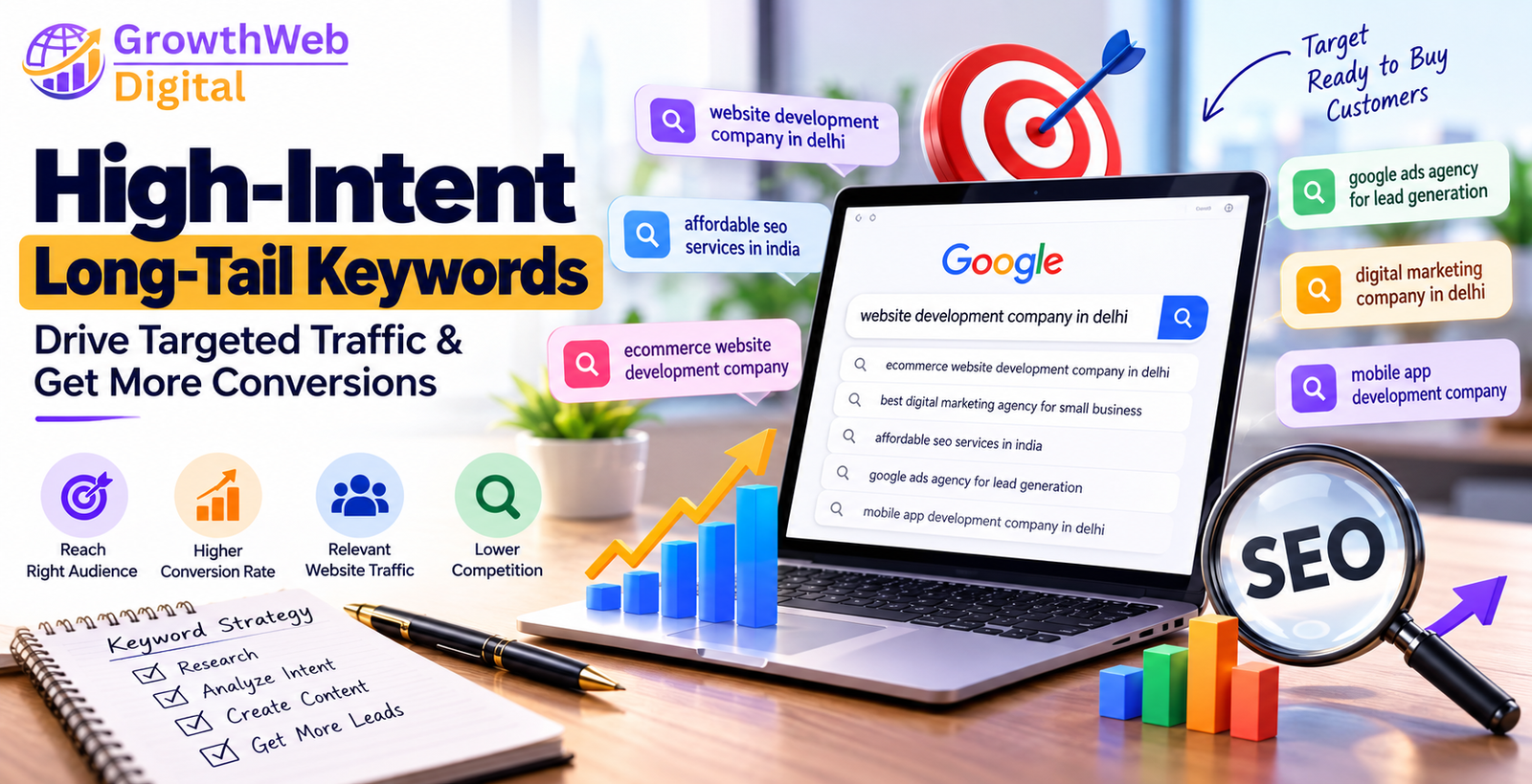
High-intent long-tail keywords tend to be more specific search phrases used by people that are further along their purchasing cycle, seeking a quotation, requesting a booking, or contacting a business directly. While having lower search volumes than head keywords, long tail phrases tend to attract a more targeted audience that is likely to convert.
For businesses looking to attract more customers via Google, targeting the right long tail keywords can be incredibly effective.
What are Long-Tail Keywords?
Long-tail keywords are typically longer search phrases that are more specific.
For example, a head keyword could be:
- Website designing
- While a long tail keyword would be something like:
- Professional website designing company in Delhi
- Similarly, for SEO services:
- Broad keyword: SEO services
- Long-tail: Affordable SEO services for small business in Delhi
Essentially, long tail searches tend to be more specific as the searcher is typically more certain what they are looking for. Instead of searching for a generic term, they might specify a location, service, budget, industry, characteristic, or buying requirement.
What is a High-Intent Keyword?
Search intent refers to the objective of a search carried out by a searcher. A keyword is deemed to have high intent when a search using that phrase demonstrates that the searcher is interested in carrying out an action. For example, the following keyword:
What is SEO?
is more informational in nature. However, a similar search with higher commercial intent would be:
- Hire SEO company in Delhi
A similar example would be:
How does ecommerce work?
vs
Ecommerce website development company in Delhi
In many cases, high-intent keywords will include terms such as:
- Best
- Company
- Agency
- Services
- Hire
- Near me
- Cost
- Price
- Quote
- Affordable
- Professional
- Supplier
- Developer
- Consultant
Why are High-Intent Long Tail Keywords Important for SEO?
While head keywords will typically have a much higher search volume, they also tend to be much more competitive. Furthermore, these keywords often have mixed search intents. A search for something as broad as:
Digital marketing
Could be carried out by completely different audiences, ranging from students, job seekers, businessmen, researchers, and even marketing course providers. With such a broad definition, it is obvious that targeting this keyword would lead to very mixed results. However, when a business targets a long tail keyword, such as:
Digital marketing agency for small business in Delhi
It becomes much more apparent as to who the searcher is. As such, long tail keywords are much more valuable for businesses looking to attract leads, rather than simply traffic.
- Benefits of Using High-Intent Long Tail Keywords
- Increased relevant traffic to the website
By targeting users that are searching for something specific, any traffic generated from these searches will be more relevant. This is because the page that the user has landed on is much more likely to match their requirements. As such, the user is much more likely to stay on the page, browse the website, and convert.
Better conversion rate opportunities
As mentioned, a long tail search is an indication that the user is further along their buying cycle and is looking for a specific product or service. As such, a page that has been optimized for a specific phrase will have a much better opportunity to convert a visitor compared to a generic page. A simple comparison will demonstrate this:
Website development company
vs
Custom ecommerce website development company in Delhi
Better opportunities for ranking
As mentioned, head keywords are much more competitive. As such, smaller businesses, start-ups, and even established organizations might struggle to rank for these keywords phrases. Furthermore, since these keywords can have mixed intents, it may not even be worth trying to rank for them if a business does not offer the products or services being searched for. However, this is not the case for long tail keywords. Using the same example as above, a website has a much better opportunity to rank for:
Digital marketing agency for small business in Delhi
compared to:
- Digital marketing
- Improved targeting opportunities
Long tail keywords enable businesses to create web pages around specific requirements. Instead of using the same general page for multiple intents, businesses can create different web pages for different needs. For example, for a business that offers website development, instead of having one general service page, it could have different web pages for:
- Ecommerce website development
- Laravel development
- B2B website development
- Small business website development
- Website development cost in India
- Better topical coverage
Essentially, using long tail keywords allows for much better topical coverage. Since the topic covered by the web page is much more specific, it is much easier to provide the information required by the searcher. Furthermore, the page will have much better chances of ranking due to the specificity of the topic. For example, creating a web page around the following topic:
- SEO friendly website designing company
- has better topical coverage and is more specific than a web page created around:
- Website designing
- Examples of High-Intent Long Tail Keywords
Using GrowthWeb Digital as an example, some long tail keywords that could be used for the different services offered by the company would be:
- Website Designing
- Best website designing company in Delhi
- Affordable website designing services in India
- Professional website designer for small business
- SEO friendly website designing company
- Responsive website design services in Delhi
- Website Development
- Custom website development company in India
- Laravel website development company in Delhi
- Business website development services
- Ecommerce website development company near me
- Web portal development company in India
- SEO
- Best SEO company for small business
- Local SEO services in Delhi
- Ecommerce SEO company in India
- SEO services for manufacturers
- Professional SEO audit services
- Google Ads
- Google Ads agency for lead generation
- Google Ads management services for small business
- PPC company for local business
- Google Ads expert in Delhi
- Google Ads agency for ecommerce business
- Digital Marketing
- Digital marketing agency for small business
- Digital marketing company in Delhi for lead generation
- Online marketing services for manufacturers
- B2B digital marketing agency in India
- Digital marketing services for exporters
- Essentially, the keywords are more specific and typically include commercial intent words.
- How to Find High-Intent Long Tail Keywords
It is important that a business has a good understanding of its customers to know what they are searching for. Businesses should think of the different search queries that a potential customer might carry out before contacting them. For example, a potential customer that intends to use GrowthWeb Digital’s services might carry out the following search:
Website development company
After realizing that they will require specific developments, they might search for:
Website development company in Delhi
After determining their budget, they might carry out a more specific search:
Affordable ecommerce website development company in Delhi
As such, businesses should think of the different requirements of their potential customers and identify the different long tail keywords that they could target.
Location-based long tail keywords
It is always a good idea for a business to optimize its website for the different locations that it operates in. As such, businesses should consider targeting location-based long tail keywords. For example, a company that has multiple offices might target keywords such as:
- Website designing company in Delhi
- SEO company in Noida
- Google Ads agency in Gurugram
- Web development company in Faridabad
- Digital marketing services in Delhi NCR
Essentially, businesses should not only optimize location-based keywords but also create unique pages for each location. It is a common mistake for businesses to create pages with the same information but with different locations mentioned. Since these pages will typically rank poorly on Google, it will be a waste of resources.
Service-specific long tail keywords
Instead of trying to rank a single page for multiple services, it is a much better idea to create different pages for different services. For example, for a company that offers digital marketing services, instead of a single digital marketing page, it can have different service-specific pages, such as:
- SEO services
- Google Ads management
- Meta Ads management
- Social media marketing
- Lead generation
- Content marketing
Once again, it is important to remember that each of these service-specific pages should target high-intent long tail keywords.
Industry-specific long tail keywords
Many organizations would only be interested in hiring a business if it specializes in their industry. As such, it might be a good idea to target industry-specific long tail keywords. For example, a company that offers digital marketing services could target keywords such as:
- Digital marketing for manufacturers
- SEO services for pharmaceutical companies
- Website development for healthcare businesses
- Google Ads for real estate companies
- Ecommerce website development for fashion brands
- Cost and pricing-based long tail keywords
Searchers that are looking for cost and pricing information are much more likely to convert since they will already have budgeted for the service or product that they are looking for. As such, businesses should consider targeting cost and pricing-based keywords such as:
- Website designing cost in India
- Ecommerce website development cost in India
- Mobile app development cost in India
- Google Ads management cost
- SEO services price in India
Creating a complete guide about cost and budgeting will encourage many potential customers to convert.
Avoiding irrelevant questions
Many potential customers will carry out research before contacting a business, which means that they will search for questions that are relevant to them or their industry. As such, businesses should create blog posts and web pages around these questions. Some examples include:
- How much does website development cost in India?
- Which is the best platform for ecommerce website development?
- SEO vs Google Ads: which is better?
- How much should a small business spend on Google Ads?
- How long does SEO take to work?
Essentially, it is best to provide clear answers to these questions and then use internal links to encourage these searchers to view the relevant service page.
Optimizing service pages for commercial intent
High-intent long tail keywords are most commonly used on service pages, since they clearly signal commercial intent. As such, businesses must ensure that their service page content is optimized for commercial searches. The content of a service page should include:
- Clear H1
- Service overview
- Benefits
- Process
- Features
- Industries served
- FAQs
- Trust signals
- Contact information
- Call to action
When creating a service page targeting long tail keywords, a business must clearly state what its service entails instead of simply providing information about the industry vertical. For example, when creating a page targeting the following keyword:
Ecommerce website development company in Delhi
the business should not simply provide general information about ecommerce development, it should clearly state what the business offers.
Avoiding keyword stuffing
While it is important to optimize web pages for long tail keywords, businesses should avoid repeating the same phrase over and over again. For example, if the targeted keyword is:
best website designing company in Delhi
the business does not need to repeat that exact phrase throughout the page, it can use variations such as:
- Professional web design services
- Website designing experts
- Responsive website design
- Custom web design solutions
Essentially, businesses should avoid repeating the same exact phrase, while also avoiding unnatural variations. Google is very good at identifying unnatural keyword usage, so businesses should always prioritize natural-sounding content that targets specific buyers.
Utilizing high-intent keywords in important SEO elements
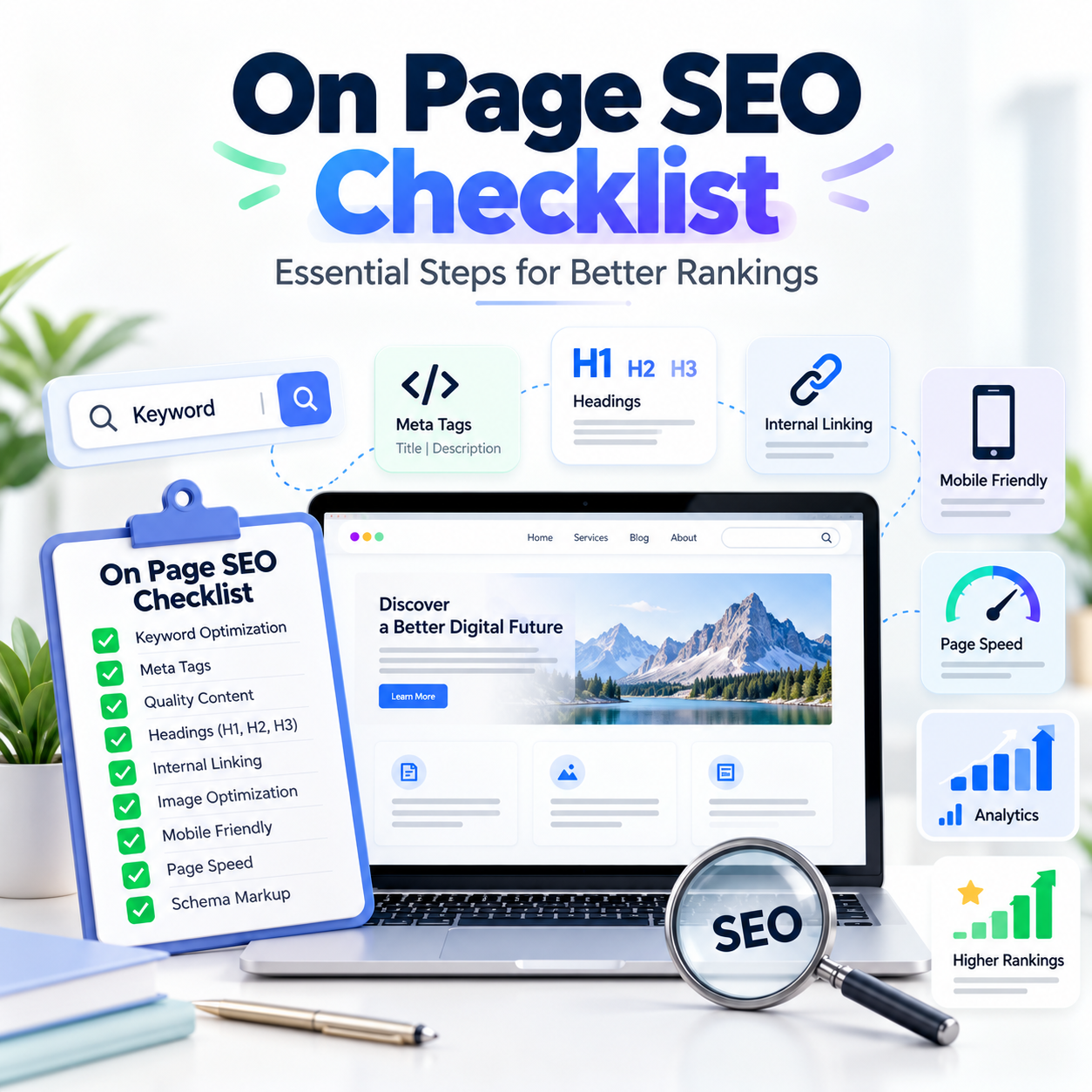
Once a business has identified a long tail keyword that it wishes to target, it should make sure to use it in the most important SEO elements, such as:
- SEO title
- H1
- Introduction
- H2 headings (when relevant)
- URL
- Meta description
- Main content
- Internal links
Using the keyword in the SEO title and URL is particularly important, since it tells both Google and the searcher what the page is about. Businesses should also avoid repeating the keyword unnecessarily, which is why the URL example below is better:
SEO Title: Best Website Designing Company in Delhi | GrowthWeb Digital
URL: /website-designing-company-delhi
Building topic clusters
As mentioned, high-intent long tail keywords should not be used on their own. Instead, they should be integrated as part of a much larger strategy that involves topic clusters. For example, using website development as the main topic, businesses can create additional web pages around related subjects, such as:
- Website Development Cost in India
- Ecommerce Website Development Cost
- Custom Website Development vs WordPress
- Static vs Dynamic Website
- Website Development for Small Business
These additional pages can then be linked to the main website development page, which will improve its topical relevance, while also providing additional information to Google and the searcher.
Using high-intent long tail keywords for Google Ads
Long tail keywords are not only useful for SEO, they can also be used for Google Ads. Essentially, the same principles apply for Google Ads keywords. Businesses should always try to target keywords that have commercial intent. Again, using the digital marketing example, while a business might traditionally target the following keyword:
Digital marketing
it should consider using a long tail keyword such as:
- digital marketing company for lead generation
- instead for Google Ads, since it will lead to better quality leads.
- Measuring lead generation performance
While businesses typically measure the success of their SEO efforts based on rankings, it is much more important to measure how many leads or sales a particular piece of content or page is generating. Essentially, a keyword that is generating 100 visitors and 10 enquiries is much more valuable than a keyword that is generating 5,000 visitors and 0 enquiries. Businesses should use tools such as Google Analytics and Google Search Console to identify which of their content and pages are generating enquiries, conversions, or sales.
High-Intent Long Tail Keyword Strategy for GrowthWeb Digital
GrowthWeb Digital can use high-intent long tail keywords for many of its services, including:
- Website Designing
- Website Development
- Ecommerce Development
- SEO
- Google Ads
- Meta Ads
- Lead Generation
- Digital Marketing
- Mobile App Development
Instead of targeting head keywords, GrowthWeb Digital can utilize long tail keywords that include a combination of the service, location, audience, and requirement. For example, GrowthWeb Digital can target keywords such as:
Website designing company in Delhi for small business
or
Google Ads agency for lead generation in India
Essentially, instead of the general:
Ecommerce
GrowthWeb Digital should target phrases such as:
Professional ecommerce website development company in Delhi
- Common Mistakes to Avoid
- Avoid targeting only head keywords
- Avoid repeating the same exact keyword
- Avoid creating hundreds of location pages
- Avoid creating multiple pages around the same keyword
- Avoid targeting keywords that are irrelevant to the business
- Avoid ignoring search intent
- Avoid keyword stuffing content
Essentially, the value of targeting long tail keywords lies in catering to the searcher intent. As such, a good long tail keyword will typically combine the following elements:
- Service
- Location
- Requirement
- Commercial intent
By creating service pages that are relevant to specific needs, along with blog content that answers specific questions, businesses can gradually improve the traffic to their website, as well as enquiry and conversion rates. In the long run, businesses will benefit much more from targeting specific searchers instead of simply chasing after keywords with high search volumes.
For professional SEO, website designing, website development, Google Ads, lead generation, and digital marketing services, GrowthWeb Digital helps businesses achieve better online presence and attract more customers with focused digital strategies.