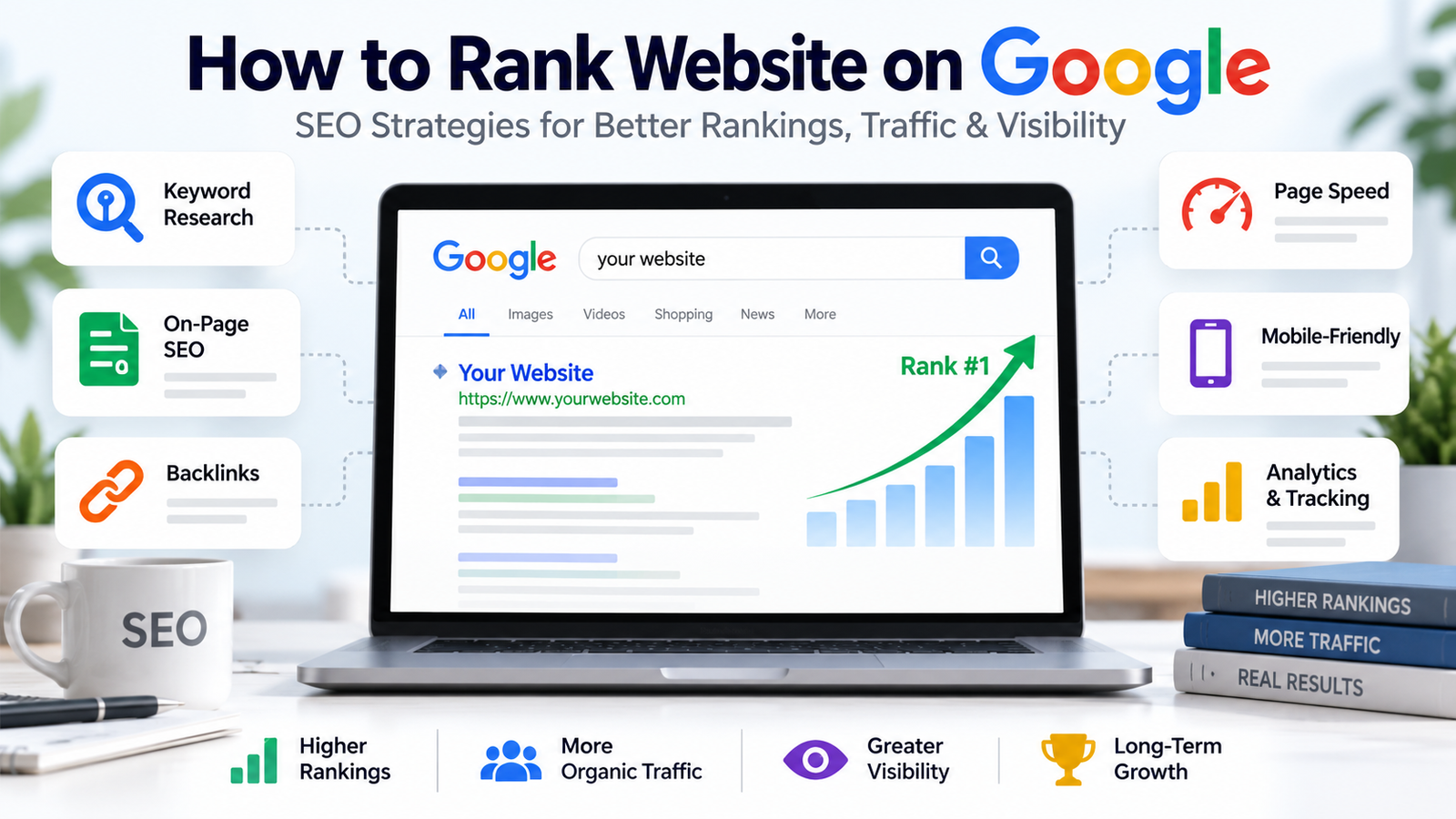
How to Rank Website on Google: Complete SEO Guide for Better Visibility
If you are looking out for how to rank website on Google guide, then you have landed on right page where you will get all important steps explained in detail.
Whether you have a small business website, ecommerce website, website of a service company, start up website, corporate website or any other business website; the below given SEO tips and tricks can be leveraged for increasing website traffic from Google.
What does it mean to rank a website on Google?
When any individual performs a keyword or phrase search on Google, search engines showcase relevant and helpful results that match the search intent of the searcher.
For example, if any individual is searching for
“website designing company in Delhi”
Google may showcase list of agencies that provide website designing services in Delhi.
Thus ranking higher on Google ensures that more number of people can see your website on the search engine results page (SERP).
With enhanced website visibility, you can:
Attract more number of website visitors.
Generate increased number of enquiries and sales leads.
Raise brand awareness and brand value.
Reach to potential customers.
Reduce heavy reliance on paid advertisements. As your website appears on the organic search results, it creates a sense of reliability and trust among website visitors.
However, SEO cannot be implemented overnight and it takes some time before the website begins to reflect improved search engine rankings.
1. Perform Proper Keyword Research
Keyword research is the first and foremost step to determine how to rank a website on Google.
As a business owner, it is important to gain an understanding of keywords that the target audience may search in order to find similar services and products as provided by your business.
For example, any digital marketing company may leverage the following keywords:
- Digital marketing company
- SEO services in Delhi
- Website designing company
- Website development services
- Google Ads management
- Ecommerce website development
- Lead generation services
Thus while selecting keywords to optimise the website content, it is important to avoid choosing keywords solely on the basis of keyword volume.
Instead, it is essential to focus on keywords that not only match the intent of search but also have relevance with the services offered by the business.
While implementing SEO, the business owner must strive to determine primary keywords, secondary keywords and long tail keywords.
Primary keywords: Main theme of the web page content.
Secondary keywords: Keywords that are closely related to the primary keyword.
Long tail keywords: Longer phrases that have search volume but are relevant to the search intent.
For example:
- Primary keyword: Website Development Company
- Long tail keyword: Best Website Development Company in Delhi for Small Business
2. Focus on Search Intent
One of the most effective ways to know how to rank a website on Google is to understand what does it mean by search intent?
It is a common observation that each search made on Google has a specific purpose. While some searches are made to get more information about any topic, others are made with an intent to purchase a particular product or service. Thus it becomes imperative for the business owners to gain an understanding about the intent of search.
Informational intent: This refers to searches made to get more information about a specific topic. For example,
How to rank a website on google
What is SEO?
How does Google Ads campaign work?
Commercial intent: These are searches made to compare products, services, companies, brands, etc. before making a final buying decision. For example,
- Best SEO company in Delhi
- Best website development company
- Shopify vs WooCommerce
Transactional intent: These are searches made with an explicit buying intent. For example,
Hire SEO company
Website development services near me
Get website design quote
3. Create High quality and Purposeful Content
Google always strives to deliver enhanced search experience to the website visitors by providing more relevant and helpful search results.
Thus when you are wondering how to rank a website on Google, it becomes essential to create high quality and purposeful content.
Avoid creating thin content for the sake of search engines.
While implementing SEO it is important to create content that provides answers and fulfils the expectations of the website visitors.
Your content should:
- Be unique and original
- Deliver complete information about the chosen topic
- Use simple language
- Cover the topic in detail
- Have relevant information
- Be scannable
- Avoid stuffing the content with similar keywords
Provide comprehensive information regarding the topic covered in the web page.
For example, while creating content about how to rank website on Google, the content should cover all important aspects including keyword research, search intent, technical aspects of SEO, backlink building, page experience, local SEO and tracking SEO performance.
4. Optimise the Page Title
The page title is one of the most important On Page SEO factors that can help to determine how to rank a website on Google.
For example, the page title for this article can be:
How to Rank Website on Google: Complete SEO Guide
Thus the page title should be catchy but it must also reflect the intent of search as well as the main keyword. Avoid using multiple keywords in a single page title.
Bad example: Rank Website Google SEO Ranking Best Google Website Ranking SEO
5. Write an Effective Meta Description
The meta description is a brief summary of the web page that can be seen in the Google SERP underneath the page title.
For example, the meta description for this article can be:
Learn how to rank your website on Google with our detailed SEO guide containing all important aspects including keywords, content, backlinks, technical SEO and website speed.
Thus while optimising the meta description, it is important to highlight the intent of the web page. Avoid stuffing irrelevant keywords in the meta description.
6. Utilise Proper Headings and Sub-Headings
While optimising your website according to how to rank a website on Google guide, it is essential to utilise proper headings and sub-headings.
The importance of using proper headings and sub-headings can be elaborated with the help of an example:
- H1: How to Rank Website on Google
- H2: Keyword Research
- H2: On Page SEO
- H2: Technical SEO
- H2: Backlinks
- H3: Guest Posting
- H3: Business Listings
Thus by using logical and relevant headings and sub headings, the website can offer enhanced user experience and it can also help to boost the SEO performance of the website.
7. Optimise the URL
When optimising a website according to how to rank a website on Google guide, it is essential to optimise the URL.
A good URL should be simple and it should be relevant to the page content.
For example,
yourwebsite.com/blog/how-to-rank-website-on-google
Avoid URLs such as yourwebsite.com/blog?id=99832&cat=seo-ranking-page
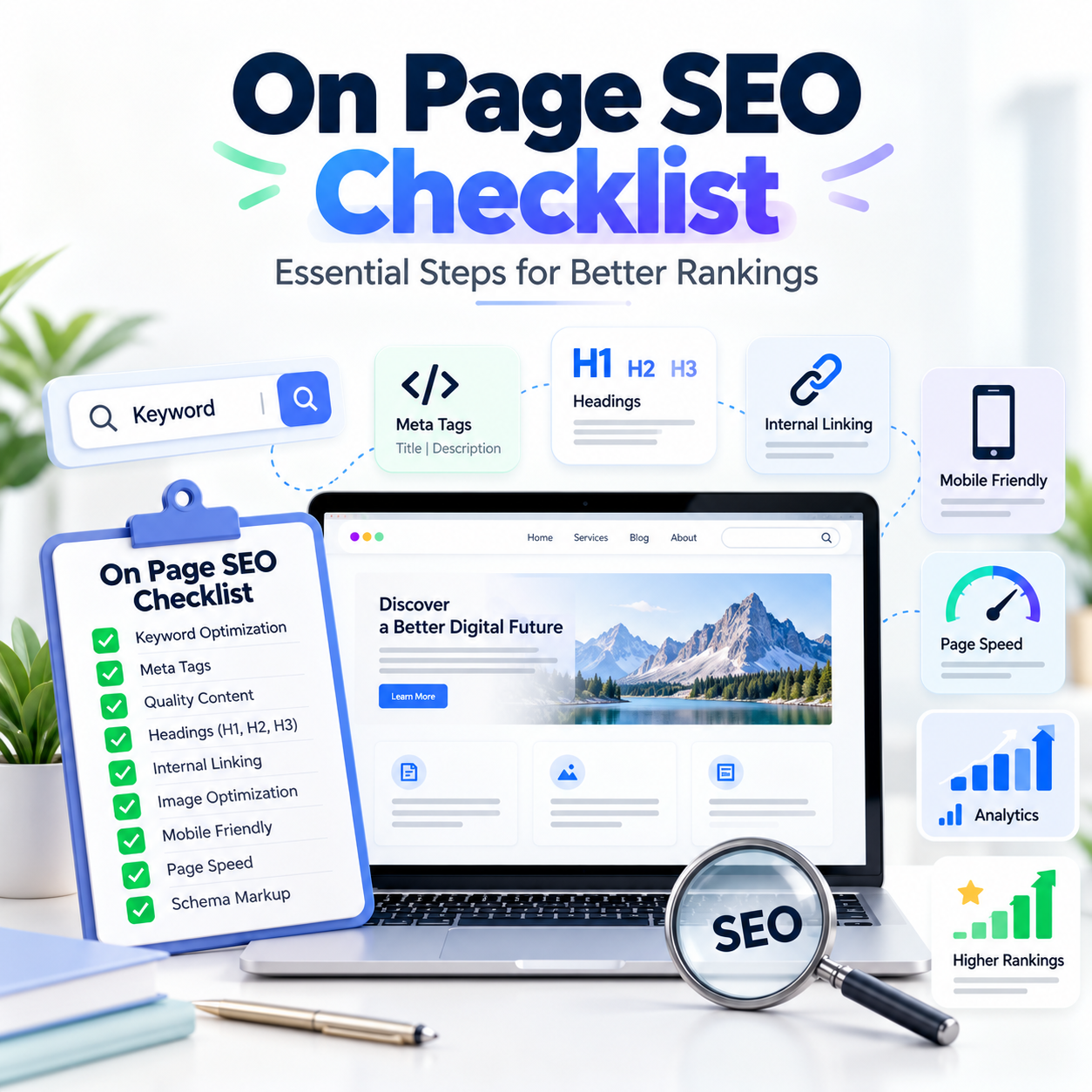
8. Enhance the On Page SEO
How to rank a website on Google guide also requires a strong On Page SEO. It is one of the easiest aspects of SEO that can be leveraged to improve the website’s visibility on the search engines.
Important components of On Page SEO include:
- SEO title
- Meta description
- H1 heading
- H2 and H3 headings
- Proper placement of keywords
- Creation of high quality and purposeful content
- Optimisation of images
- Internal linking and URL structure.
- Mobile friendliness.
By optimising On Page SEO factors, you can improve the visibility of your website on Google without the need to implement any complex SEO strategies. When optimising On Page SEO, remember to avoid keyword stuffing.
Your main keyword should appear in relevant places such as SEO title, H1 heading, content, image alt text and URL.
9. Leverage Internal Linking
Internal linking refers to linking to pages within your own website. Internal linking is one of the best SEO practices that can be applied while implementing how to rank a website on Google guide.
For example, if you have a digital marketing blog, the blog can be linked with other relevant web pages such as SEO services, website designing, website development, Google Ads, social media marketing, lead generation services and ecommerce development. Internal linking can help to:
- Improve the overall website structure.
- Enhance the page authority.
- Increase website crawlability and crawlability budget.
- Encourage website visitors to explore more web pages.
When linking to other web pages within your website, it is essential to use relevant anchor text that specifies the context of the linked web page. For example, Explore our professional SEO services is a better anchor text as compared to Click here.
10. Optimise Images
Large images can slow down the website and they can also diminish the overall website user experience. While optimising images according to how to rank a website on Google guide, it is important to:
- Compress the image
- Resize the image
- Optimise images with webP extension.
- Give relevant and meaningful names to images.
- Add relevant alt text to images.
Avoid stuffing keywords in image file name and image alt text. Instead of using IMG_2026_00983.jpg, use how-to-rank-website-on-google.webp
11. Enhance Website Speed
Website speed is among the key factors influencing the website’s performance on Google. Website visitors may get frustrated when they are unable to load a particular web page.
Common reasons for slow loading websites include:
- Large images
- Unnecessary scripts
- Too many plugins
- Heavy animations
- Poor hosting
- Unwanted CSS
- Unused JavaScripts
How to optimise website speed according to how to rank a website on Google guide?
- You can optimise image sizes
- Implement browser caching
- Optimise code
- Leverage Content Delivery Network (CDN)
- Opt for better hosting plan
- Implement lazy loading
- Remove unwanted scripts, etc.
12. Make your Website Mobile Responsive
Most of the Google searches are performed on mobile devices and in 2023, mobile first indexing is followed by search engines. Thus while determining how to rank a website on Google, it is important to optimise the website so that it can be compatible with all types of devices including smartphones, tablets and desktops. Ensure that:
- Text is easily readable.
- Buttons are easy to click.
- Forms are easy to fill.
- Images are properly adjusted.
- Navigation menu works properly.
- Pages do not require horizontal scrolling.
- Popups are not intrusive.
13. Fix Technical SEO Issues
Technical SEO refers to the set of optimisation techniques that can be implemented to ensure that Google can easily crawl and index web pages.
Common technical SEO issues include:
- HTTPS
- XML sitemap
- Robots.txt
- Canonical tags
- 404 error
- Redirects
- Duplicate pages
- Indexability issues
- Structured data
- Page status codes, etc.
Even if you have created high quality content and invested efforts to optimise the content for search engines, it may not yield the desired results if Google is unable to crawl and index your web pages.
14. Submit XML Sitemap
XML sitemap acts as roadmap for search engines so that they can understand your website structure and it can also help to index all your important web pages. Your XML sitemap may contain a list of all your important web pages including main pages, service pages, product pages, categories and blog posts. Submit the sitemap of your website to Google Search Console to let it know that your website has new web pages.
But keep in mind that submitting an XML sitemap does not guarantee that Google will index your web pages.
15. Use Google Search Console
Google Search Console is one of the most important SEO tools that can be utilised to assess the performance of a website in terms of organic traffic, keywords, impressions, clicks, average position, crawl errors, indexing issues, etc. You can also use Google Search Console to inspect any web page and request indexing of any updated web page.
16. Build Quality Backlinks
A backlink refers to a link from another website to your website. Building relevant and quality backlinks is one of the most effective ways to rank higher on Google. However, it is important that you avoid purchasing hundreds and thousands of backlinks from a single source. You can utilise the below mentioned strategies to build quality backlinks:
- Publish high quality and informative resources.
- Gain backlinks from relevant business directories.
- Implement guest posting strategy.
- Collaborate with other businesses.
- Leverage Public Relations (PR).
- Participate in useful link roundups.
- Focus on local citations.
- Avoid spammy backlinks building practices.
- 17. Publish Relevant Blog Posts
While determining how to rank a website on Google, you can also consider publishing blog articles related to your main services or products. For example, if you have a digital marketing agency, apart from publishing your services page, you can also publish blog articles such as:
- How to rank a website on Google
- On Page SEO checklist
- Technical SEO checklist
- SEO vs Google Ads
- Website designing cost in India
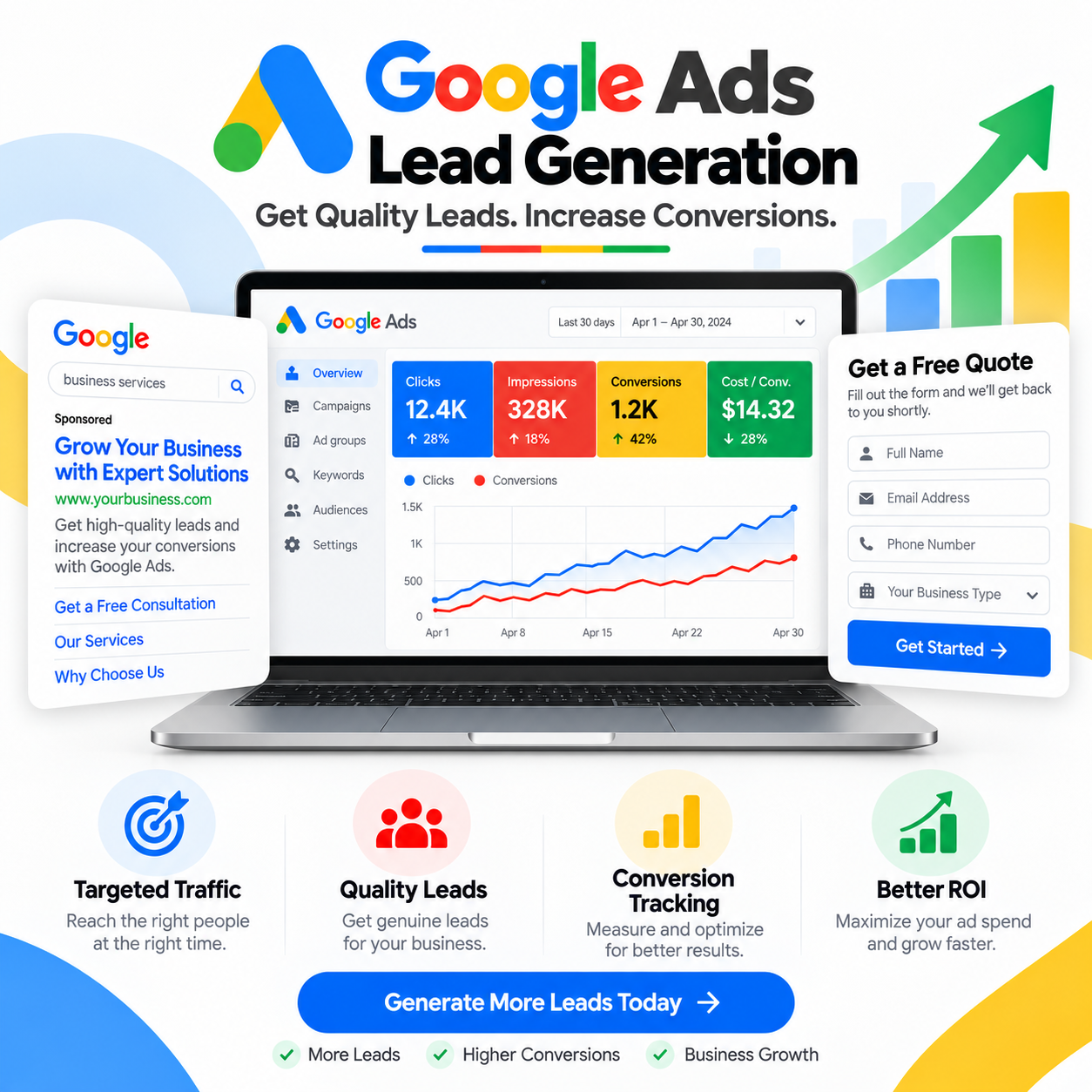
- Google Ads Lead Generation
- Ecommerce website development cost in India
- Local SEO guide
Each blog article must contain internal links to relevant services offered by your organisation.
18. Build Topic Clusters
When implementing SEO strategies, avoid publishing random blog posts. Instead, you can build topic clusters around your main services and products.
For example, SEO topic cluster can be built by creating the following blog content:
- SEO Services Page (Main Page)
- How to rank a website on Google
- On Page SEO checklist
- Technical SEO checklist
- Local SEO guide
- SEO vs Google Ads
- Keyword research guide
Each blog article can be linked to SEO Services Web Page. This way Google can identify that your website offers comprehensive SEO services.
19. Optimise your Website for Local SEO
If your business targets local customers, it is important to optimise your website according to local SEO guidelines. You can begin with creating and optimising your Google Business Profile. Ensure that your website lists your business name, address, phone number, website, services, etc. Only create location specific web pages if required and do not create over 100 similar location pages for different cities. Instead create relevant and informative local content for each city or location you are targeting.
20. Optimise your Google Business Profile
Your Google Business Profile can provide immense traffic, leads, sales and visibility to your business. Ensure that your business profile is complete and updated with relevant information such as business category, business description, business phone number, website link, business opening hours, photos, services and posts. Encourage your genuine customers to leave reviews and respond to each review professionally.
21. Add Structured Data
Schema mark up or structured data can help to improve the visibility of your website on Google. You can choose from the following schema categories:
- Organization
- LocalBusiness
- Article
- Breadcrumb
- Product
- Service
However, always ensure that the structured data reflects the information that can be found on your web page.
22. Avoid Duplicate Content
Avoid publishing too many web pages that contain similar content. This issue is commonly witnessed with business website owners that automatically generate location specific web pages.
It is important to create relevant content on each web page and if the location specific page is necessary, it must contain relevant and unique information. For example, while creating a web page about website designing services in Delhi, you should add more information that is relevant to Delhi as compared to website designing services in Mumbai.
23. Refresh Old Content
When determining how to rank website on Google, it is essential to refresh old content regularly. Old content must be checked for:
- Outdated information
- Broken links
- Missing internal links
- Poor title
- Weak sections
- Old statistics
- Missed search queries
- Pages with declined traffic
Once you identify the areas of improvement, make the required changes to refresh the content.
24. Enhance the User Experience (UX)
A good UX can ensure website visitors have a positive experience and they can easily find the required information. Avoid cluttered websites and ensure that the website visitors can clearly identify the purpose of your website, your offerings, how to contact you and how to navigate your website. Use simple and clean website layout, clear headings, legible fonts, short paragraphs and proper spacing. Make the contact forms simple and avoid using poor call to action buttons.
25. Focus on Conversions
Getting ranked on Google is important but it will not yield any results if the website visitors are not converted into sales leads or customers. Ensure that your website has relevant calls to action (CTA) so that the website visitors can get the information they are looking for. If you have a service based business, your service page must encourage the visitor to take the next step such as:
- Get free consultation
- Request quote
- Call now
- Email now
- Explore services
- View portfolio
- Contact us
Thus even if a service page with SEO optimised content gets 1000 website visitors, it may not yield any results if only 10 enquiries are generated from that page. A high conversion rate can be more beneficial to a business as compared to a high traffic volume.
26. Track your SEO Performance
SEO performance should be tracked and analysed to determine which pages are driving organic traffic and which pages have scope of improvement.
Track important SEO metrics including:
- Organic traffic
- Impressions
- Keywords
- Leads and sales
- Form submissions
- Calls and emails
- Landing page performance
- Conversion rate.
Conclusion
How long does it take to rank a website on Google?
Every business website is different and the time taken to rank a website on Google may vary depending on the competitiveness of keywords, domain authority, relevance, backlink profile, technical SEO, search intent, industry and target location. Some of the SEO factors may yield quick results while others may take some time to show improvement.
Common SEO Mistakes to Avoid
Most of the business owners make mistakes while trying to determine how to rank a website on Google which may affect their SEO performance. Such mistakes include:
- Keyword stuffing
- Buying cheap and spammy backlinks
- Publishing thin content
- Creating duplicate location pages
- Neglecting mobile user experience
- Ignoring technical SEO
- Creating poor titles
- Choosing irrelevant keywords
- Expecting quick results.
- Quick Checklist to Rank your Website on Google
- Before you can go ahead and implement advanced SEO tactics, make sure that:
- You have completed keyword research.
- You have identified the intent of search.
- You have optimised proper SEO titles.
- You have written effective meta descriptions.
- You have created one H1 tag.
- You have created proper H2 and H3 tags.
- You have published high quality and purposeful content.
- You have included internal links in your content.
- You have optimised the images.
- You have improved website speed.
- You have optimised the website for mobile users.
- You have fixed technical SEO issues.
- You have added XML sitemap.
- You have connected Google Search Console.
- You have built quality backlinks.
- You have published relevant blog content.
- You have optimised your website for local SEO and Google Business Profile.
- You have added appropriate schema.
- You have avoided duplicate content.
- You have tracked SEO conversions.
How GrowthWeb Digital can help:
GrowthWeb Digital helps businesses to increase their website traffic, visibility, sales leads and sales through website designing, website development, SEO services, Google Ads, digital marketing and lead generation services.
A holistic and integrated approach towards SEO, website development and digital marketing can assist a business to drive more quality traffic to the business website. Rather than focusing on tricks to rank higher on Google, a business must strive to create websites that offer enriched experience to the website visitors and it must facilitate the task of finding the right information.
Conclusion
When you are trying to determine how to rank website on Google, it is important to keep in mind that there is no magic trick that can instantly push your website on the first page of Google. Increased website traffic can be generated by creating purposeful and informative content along with implementing proper SEO tactics. Focus on creating quality content around the search intent, optimise the content for search engines, improve the technical aspects of website and build quality backlinks. SEO is a marathon and not a sprint.